
CAIRIBU Catalyst Conversation with Adam Kuchnia, PhD, RDN – What Can We Learn About Lower Urinary Function and Dysfunction From Muscle and Mitochondria Research?
This event has passed.
(12 PM CT | 10 AM PT)
Zoom Link
The purpose of CAIRIBU Catalyst Conversations is to strengthen non-malignant urology research efforts by stimulating new ideas & novel experimental approaches, novel use of existing tools & technologies, and interdisciplinary collaborative research efforts. This Catalyst Conversation will feature ADAM KUCHNIA, PHD, RDN, Assistant Professor of Nutritional Sciences. Dr. Kuchnia’s research interests include muscle and protein metabolism and nutritional management in clinical populations.
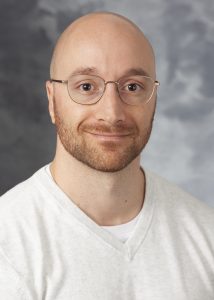 From the Kuchnia Lab “Currently, our research focuses on clinical nutrition, in vivo muscle imaging, and ex vivo measures of mitochondria function to assess muscle quality and energetics. We are particularly interested in novel applications to refine protein recommendations with the goal of preserving muscle mass and muscle quality, while preventing the negative consequences of aging and disease. Our research also aims to develop novel, noninvasive methods to accurately detect muscle wasting and monitor changes in skeletal muscle while optimizing therapeutic intervention throughout medical treatment and surgery, including chemotherapy and transplantation. Our lab expertise in body composition techniques, with specific training using numerous imaging modalities to characterize muscle wasting and muscle quality using various ultrasound techniques, bioimpedance spectroscopy, dual-energy X-ray absorptiometry, computed tomography, and magnetic resonance techniques in healthy and clinical populations.”
From the Kuchnia Lab “Currently, our research focuses on clinical nutrition, in vivo muscle imaging, and ex vivo measures of mitochondria function to assess muscle quality and energetics. We are particularly interested in novel applications to refine protein recommendations with the goal of preserving muscle mass and muscle quality, while preventing the negative consequences of aging and disease. Our research also aims to develop novel, noninvasive methods to accurately detect muscle wasting and monitor changes in skeletal muscle while optimizing therapeutic intervention throughout medical treatment and surgery, including chemotherapy and transplantation. Our lab expertise in body composition techniques, with specific training using numerous imaging modalities to characterize muscle wasting and muscle quality using various ultrasound techniques, bioimpedance spectroscopy, dual-energy X-ray absorptiometry, computed tomography, and magnetic resonance techniques in healthy and clinical populations.”