
Lou’s on the Move!
Ahead of the 2026 CAIRIBU Annual Meeting, the CAIRIBU Interactions Core invites investigators across the CAIRIBU Community to participate in the “Lou on the Move” campaign! Lou is traveling across the country, making stops at labs and research groups attending the Annual Meeting to highlight the breadth of the CAIRIBU network and showcase the diverse institutions where our community conducts research.
Follow along on Lou’s journey and see the CAIRIBU community come together from across the country! Explore photos and videos from the labs Lou has visited.
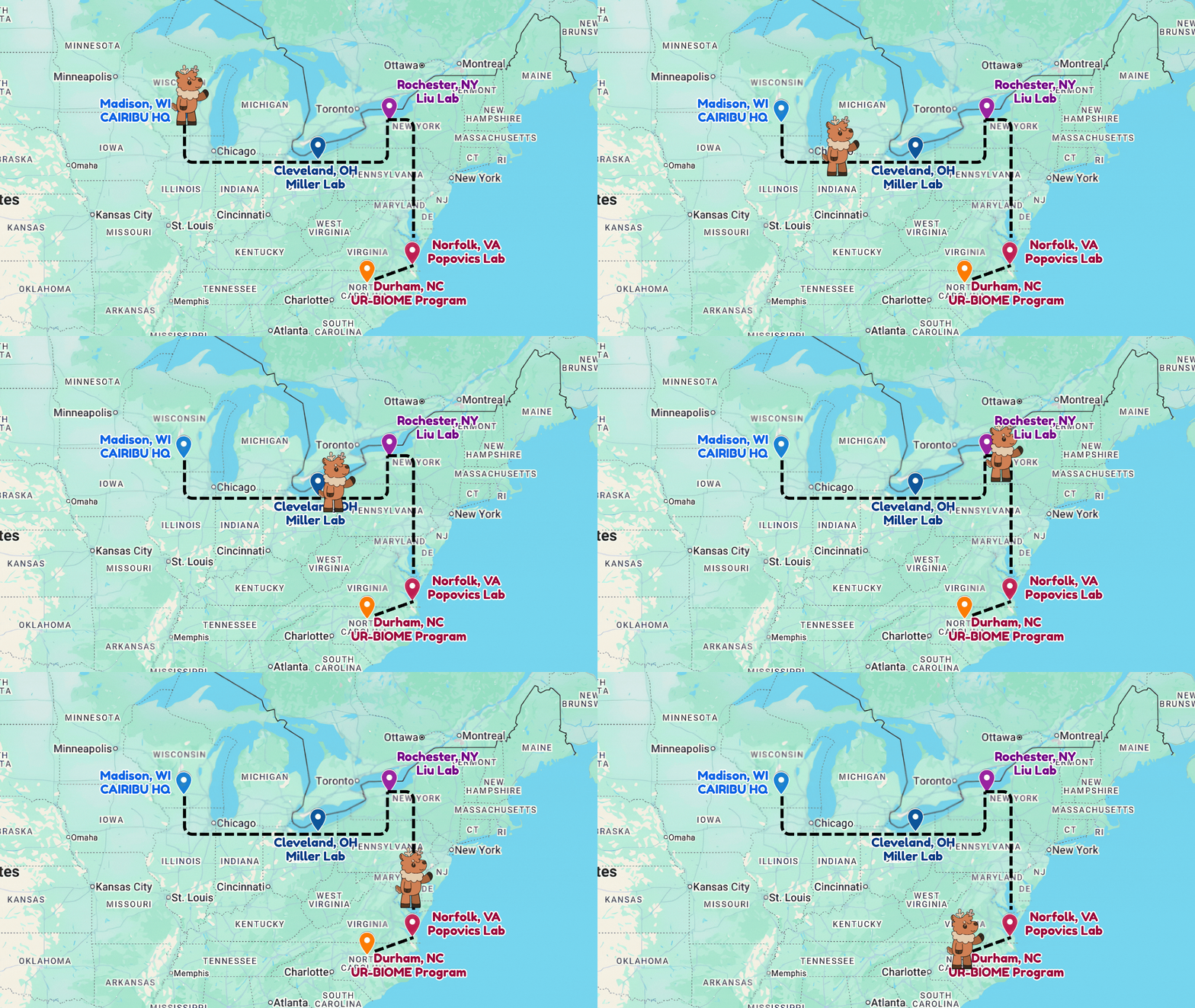
See where Lou’s been so far!

Aaron Miller Laboratory
Research in the Miller Lab is focused on the confluence of the diet, microbiome, and host factors in the development of chronic urologic disease and co-morbidities. Chronic urologic diseases such as kidney stones, urinary tract infections, and chronic kidney disease are age-related disorders that have been increasing in prevalence over the last 50 years, consistent with co-morbid cardiometabolic diseases.
They take a multi-omics approach using a combination of in vitro studies involving commensal bacteria with or without host cells, pre-clinical studies, and clinical studies to understand how the microbiome influences urinary tract health and factors such as vascular calcification and plaque accumulation that underpin many age-related chronic diseases. The goal of this research is to understand what factors have led to an increasing prevalence of urologic and cardiometabolic disease, the underlying commonalities among these co-morbidities, and to develop efficacious bacteriotherapies designed to alleviate the burdens of chronic disease.
Read more
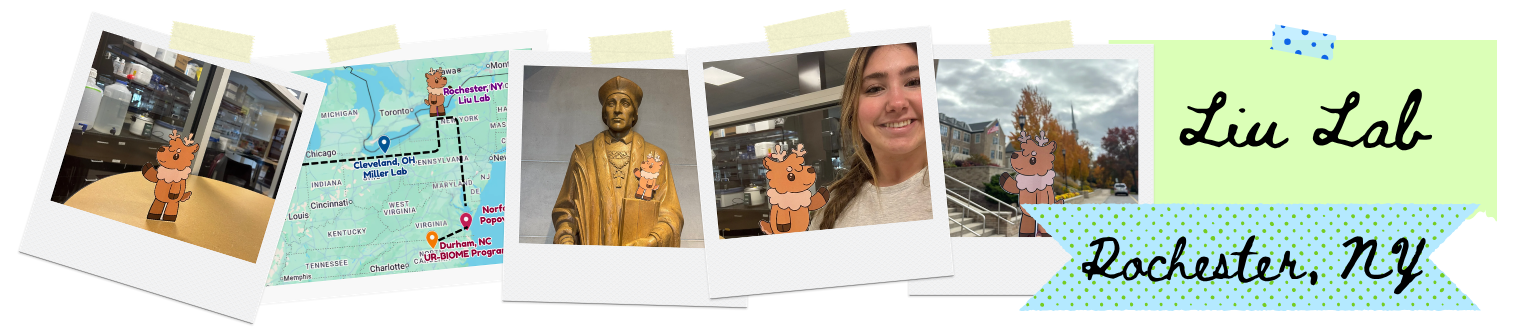
Liu Lab
Teresa Liu leads a research laboratory at St. John Fisher University, Wegmans School of Pharmacy. Her research interests shifted to the role of steroid hormone signaling in malignant and benign prostate disease during her postdoctoral training. As a Research Assistant Professor at the University of Wisconsin–Madison, Dr. Liu began to examine the mechanisms of aging that underlie lower urinary tract dysfunction along with the lifestyle interventions that increase longevity and healthy aging.
Read more
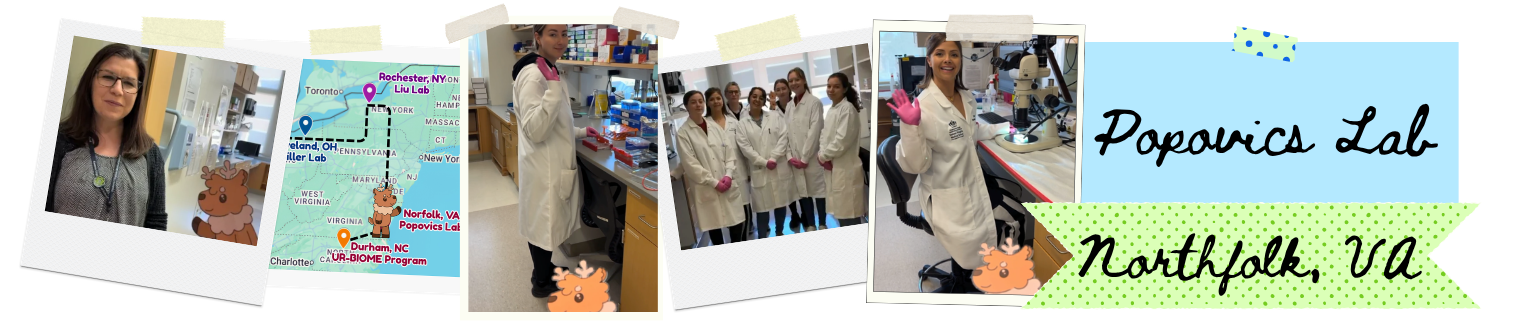
Popovics Lab
The Popovics lab investigates the intricate molecular and cellular mechanisms driving prostate tissue remodeling. Their research focuses on the critical interplay between epithelial cells and the surrounding stroma, identifying key signaling pathways that lead to fibrosis and inflammation. By bridging histology with molecular biology, they aim to uncover novel therapeutic targets for managing BPH pathology and preserving urinary function.
One of their recent key findings is that macrophages migrate to the prostate lumen, where they take up lipids and become foam cells. They identified that these cells express genes that encode known secreted pathological factors, including VEGF, TGF-β1 and osteopontin, proposing an unfavorable role for this cell type. Their studies investigate how macrophages traffic to the lumen and how secreted factors that they produce affect prostate pathology
Read more
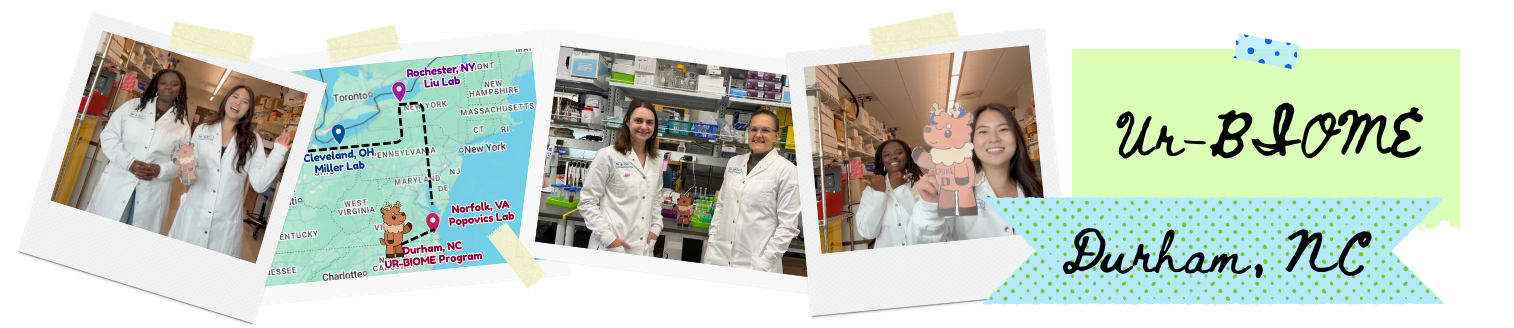
Ur-BIOME Program
The Duke Urogenital Microbiome (Ur-BIOME) Research Program includes physicians, scientists, patient advocates and trainees who are committed to driving groundbreaking research on how the urogenital microbiome shapes human health. A key focus of their work is exploring sex-specific differences in the urogenital microbiome across various life stages and understanding how these differences influence a woman’s overall well-being. Their interdisciplinary team is passionate about translating our findings into tangible benefits for others. They do this by pushing the boundaries of knowledge, training future researchers, and educating the public. Together, they embark upon a journey of discovery, innovation, and impact.